Upcoming Events
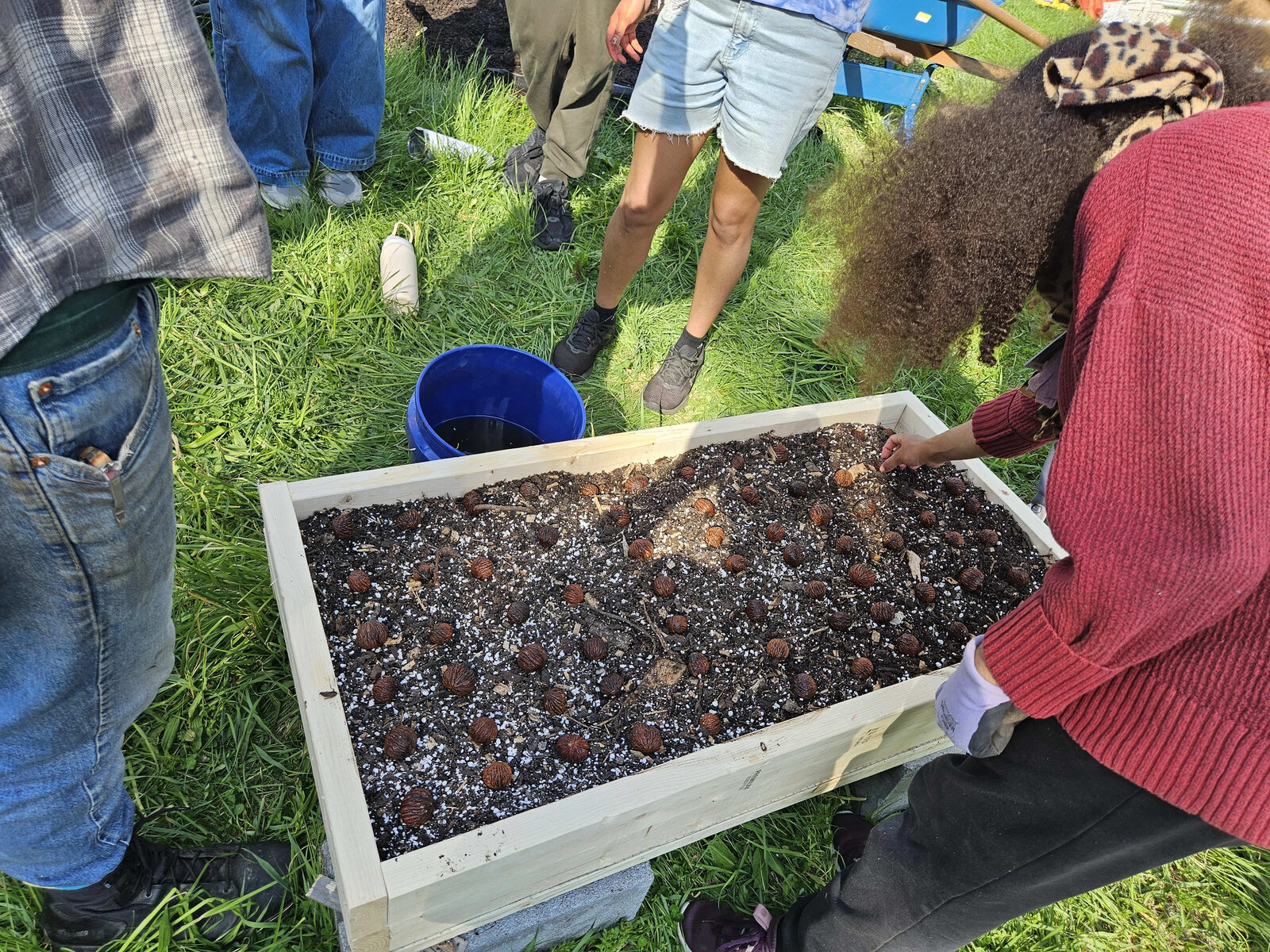
Solutions Inspired by Nature: Biomimicry, Agroforestry & Tree Propagation
Date: October 13, 2026 · Time: 6–8pm · Location: CCE Ulster, 232 Plaza Road, Kingston, NY 12401 · Cost: $10
An evening exploring how natural systems can inform sustainable farming through three presentations on syntropic agroforestry, air-prune tree production methods, and biomimicry for ecological restoration in farming systems. Featuring Elinor Kwitney Stapylton (Nature-Based Solutions in farming systems), Jonathan Dean (agroforester and Hudson Valley farmer), and Connor Youngerman (Cornell Small Farms Agroforestry and Mushroom Specialist).
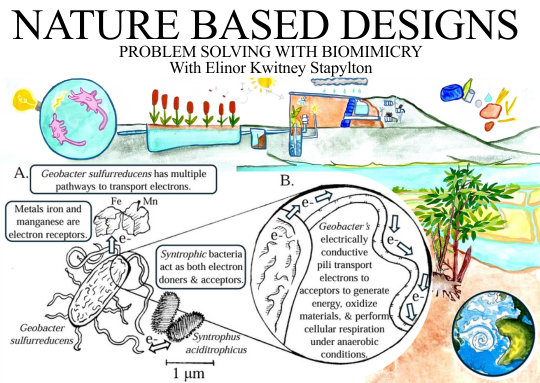
Nature Based Designs: Problem Solving with Biomimicry
A five-class bio-design intensive workshop series by Elinor Stapylton and the Cornell Creative Arts Center.
Dates: October 17 – December 12, 2026 · Location: 129 Cornell St, Kingston, NY 12401
Calling all fields! Are you an engineer, educator, designer, farmer, researcher, builder, entrepreneur, resource provider, student or a community member passionate about what we can learn from the natural world to solve our problems?
In this bio-design intensive workshop series you will use the biomimicry design framework to:
- Investigate target problem areas that you identify in your discipline to meet our essential needs of food, water, energy, shelter, waste management, and supporting community cultural and ecological services.
- Look to nature for inspiration from the diversity of solutions that already exist.
- Distill the key abstracted elements of those biological strategies for applications across design fields.
- Model actionable solutions inspired from nature that can be integrated into our real world systems.
- Continuously reevaluate our limitations to make data informed future evolutions in designs using adaptive management frameworks.
The course will culminate in a compilation of your solutions from this nature based designs class in a research poster which participants will share in a poster session for the Cornell Creative Arts Center and greater community.
Resources: Participants will be asked to bring a valid email address, a flash drive, notebook or paper, and to complete outlined assignments before the following class. Room: Computer lab.
Class 1 · Oct 17 Defining context and problems
In this introductory class we will learn about the fundamentals of biomimicry and other biodesign field methodologies and begin defining the contextual constraints that are relevant to the functions we are trying to solve, as well as use system mapping tools to identify key resources and feedback loops.
Participants will be asked to:
- Complete a scoping activity to map their problem context and desired function to address their problem area, and be ready to share in class #2. (Required for final poster.)
- Choose one or multiple: (a) Sign up for an iNaturalist account, join the "Nature Based Designs ID Support Group" and make an observation and support another's identification of an organism before the second class. (b) Investigate your identified function in the AskNature biomimicry web-resource and save your research results to discuss in the second class.
Class 2 · Oct 31 Observing strategies in nature
In this class, we will learn methods for surveying and identifying organisms in our environment. Using these tools as well as our senses, we will make qualitative and quantitative assessments about the health and wellbeing of our systems through biodiversity measures, and use a functional lens to observe patterns and strategies related to our problems.
Participants will be asked to:
- Complete an observing activity by investigating where your identified function occurs among biological strategies found in nature through your own observations and/or through the AskNature biomimicry web-resource, and be ready to share in class #3. (Required for final poster.)
- Choose one or multiple: (a) Post observations in need of identification support on iNaturalist and contribute to group dialogue before the next class. (b) Create a nature journal entry that organizes your biological surveys and be ready to share in class. (c) Bring samples for group observation of key features and photographing under the microscope in class #3.
Class 3 · Nov 14 Distilling key design elements from biological mechanisms
In this class, we will work on researching the key physical forms, chemical processes, and system dynamics that make biological strategies successful. With these emulation tools we can apply abstracted design principles across disciplines, as well as discuss the role of ethical direct partnerships with living systems through bio-utilization.
Participants will be asked to:
- Expand on your identified successful strategies to isolate key abstracted functional forms, processes and systems, and be ready to share for class #4. (Required for final poster.)
- Choose one or multiple: (a) Post observations in need of identification support on iNaturalist and contribute to group dialogue before the next class. (b) Bring relevant tools and resources to share or discuss for design concept prototyping from your abstracted strategies in the next class.
Class 4 · Nov 28 Model actionable solutions inspired from nature
In this class, we will incorporate the design principles distilled from our biological strategies and work on design ideation and prototyping. You will also work on creating your nature-based design research poster and share a draft with another participant for peer review using the biomimicry evaluation rubric, making sure to integrate life's principles to ensure our solutions create the conditions conducive to life.
Participants will be asked to:
- Return their biomimicry evaluation criteria checklist to their peer by Saturday, December 5th.
- Create their final nature-based design solution and prepare research poster materials, and be ready to print and share in the final class #5. (Required for final poster.)
Class 5 · Dec 12 Nature based designs poster presentation
In this class, participants share their nature based solution results, and provide feedback evaluations to others discussing adaptive management and ongoing evaluation tools for their peers' solutions to create the conditions conducive to life. In order to celebrate our learning in reciprocity with nature, we open the findings of our nature-based designs poster session to the greater community with the goal of sharing and reevaluating our findings and promoting our commitment to continuous experimentation and making intentional design changes to arrive at optimized community-mediated evolutions in resilient place based designs.
Register for the workshop series
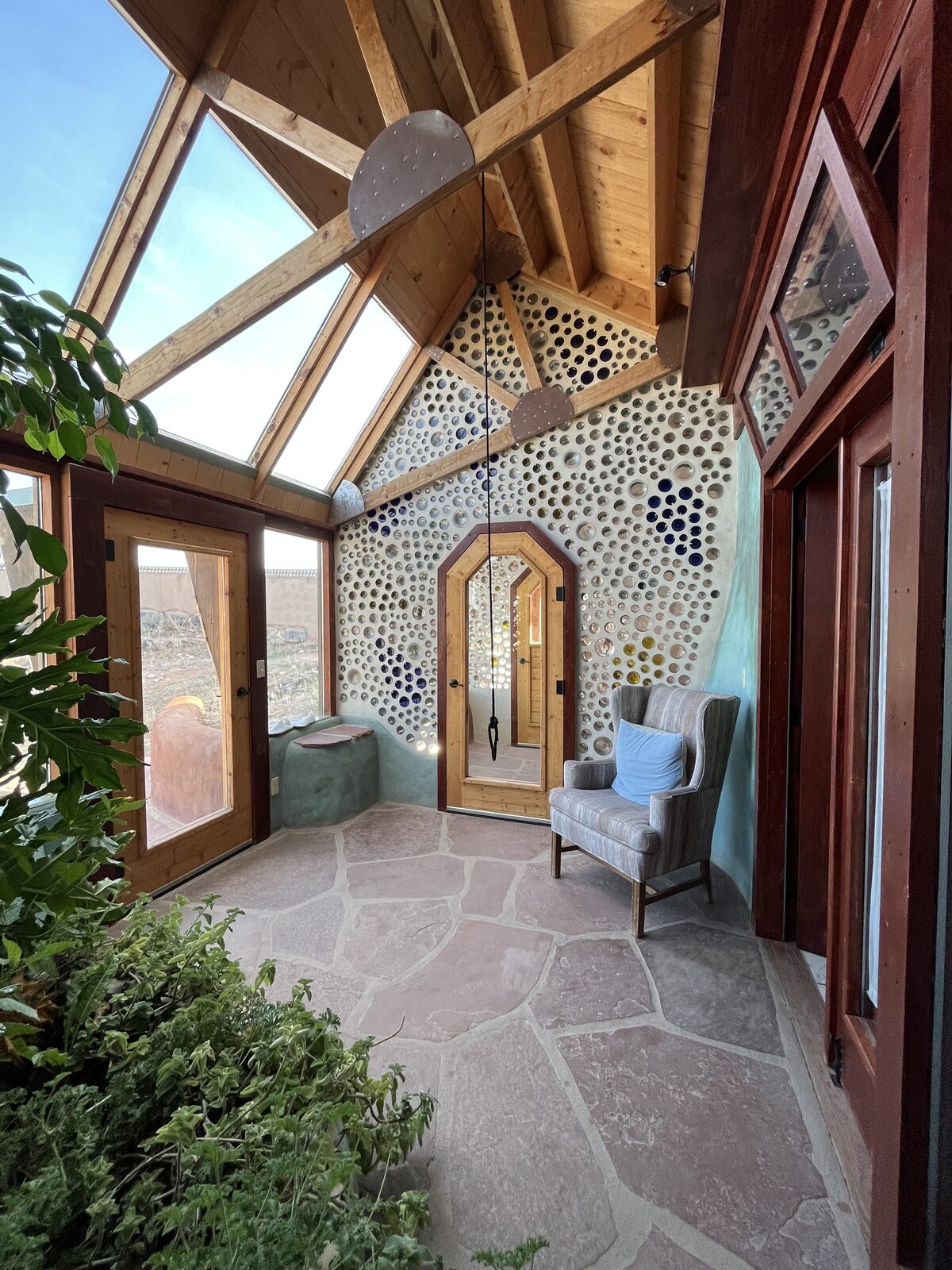
Lessons from Earthships Workshop
Date: October 24, 2026 · Time: 11am–1pm · Location: Silver Lake Nature Center
Lessons from Earthships and biomimicry for passive greenhouse design. How do organisms in nature heat and cool their structures? Together we will learn from all the solutions that already exist across nature as well as human design for how we can passively regulate the temperature of our growing spaces with accessible resources and tools. We will learn how to optimize solar gain and thermal mass for future greenhouse buildings and discuss retrofits, costs, and benefits to enhancing the performance of existing structures.
Past Events
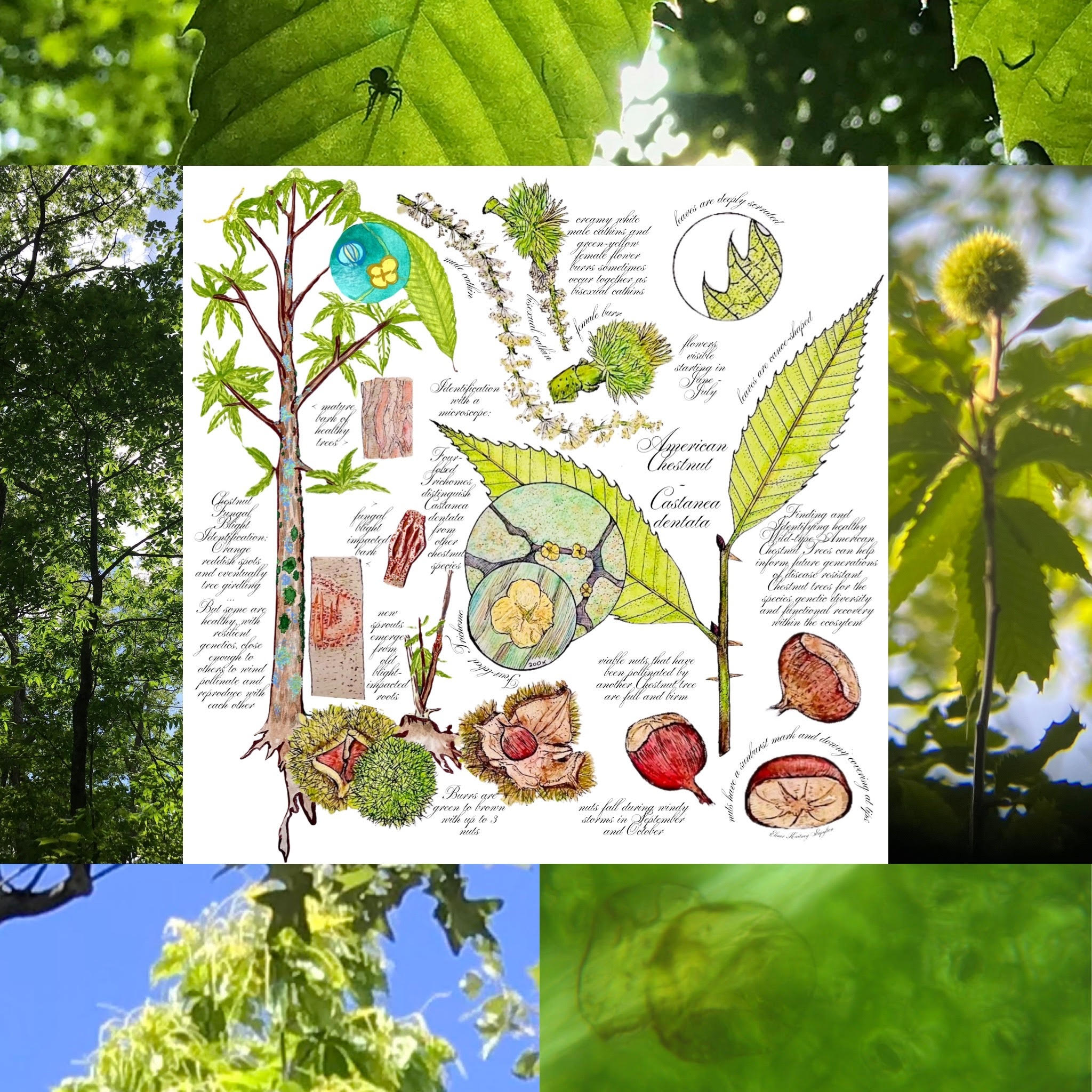
American Chestnut Leaf ID Workshop with Microscopes and Nature Journaling
Want to learn how to identify American chestnuts?
Date: July 4, 2026 · Time: 12–4pm · Location: Hortus Arboretum and Botanical Gardens — Art in the Gardens program
Join us for a leaf ID nature journaling opportunity where we will learn how to tell different species and hybrid chestnut trees apart by looking at their distinct leaf structures under the microscope. Do you think you’ve found an American chestnut tree on your property or on a trail? Bring the pressed or fresh leaf with you and we will ID it together under the microscope and take illustrative notes on the key distinguishing features. Then after the program, and with your new identification skills, take to the trails as a citizen scientist and help find lingering healthy American Chestnut trees who are crucial for preserving the genetic diversity of the species in conservation breeding programs. Limited supplies of paper and homemade grapevine charcoal will be available for illustrating your botanical observations.
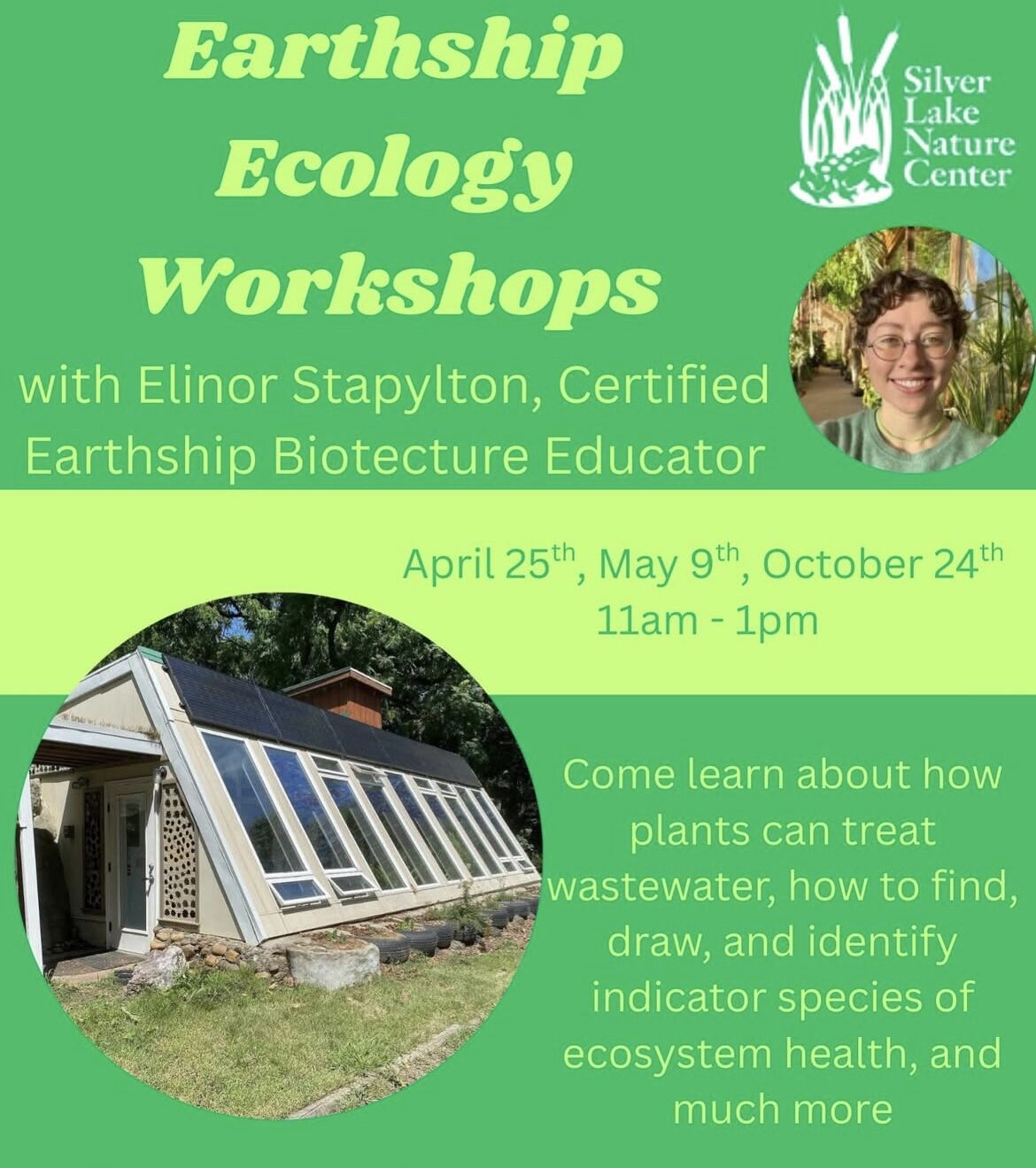
Earthship Ecology Workshop (Part I)
Date: April 25, 2026 · Time: 11am–1pm · Location: Silver Lake Nature Center
You are invited to join us for this introductory workshop about Earthships and the amazing process of how plants treat wastewater in them, using “biomimicry tools” to assess system health. Together we will learn about all the time tested strategies found in Nature and how asking questions and making observations about how ecosystems remediate wastewater can help us solve our own problems. Together we will find, draw, and identify indicator species of ecosystem health so we can learn how we can best support the ecosystems that in turn support us within Earthship homes and how this can also be applied to conventional homes and our environment in general.
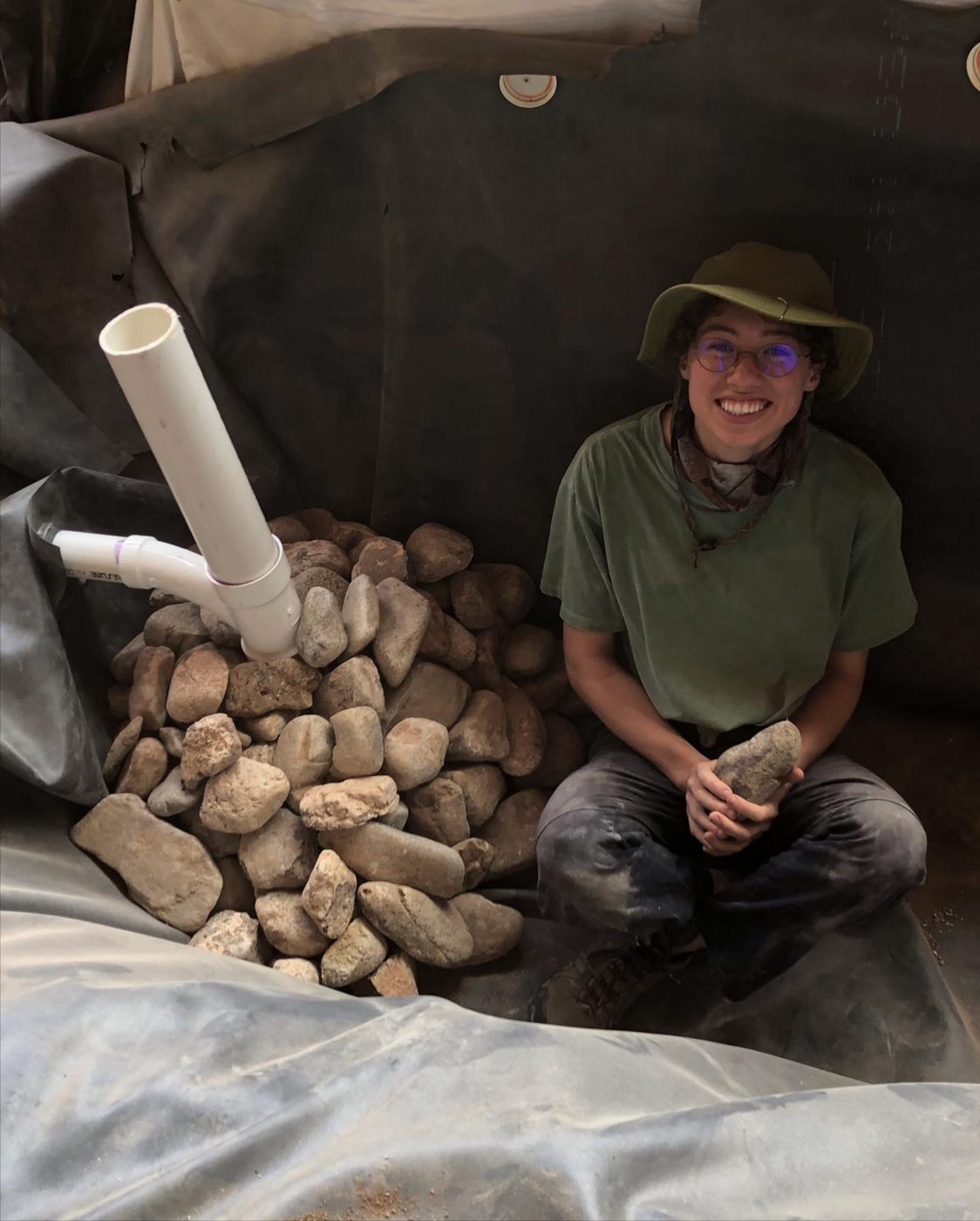
Earthship Ecology Workshop (Part II)
Date: May 9, 2026 · Time: 11am–1pm · Location: Silver Lake Nature Center
This Earthship Ecology Workshop will build on the state of the science, inviting All to join us in a citizen science research project where we will work together to develop the next evolutions in sustainable design with tools from biomimicry. In this workshop, we will learn about all the solutions that already exist for how Earthship ecosystems treat wastewater and produce food & energy. Together we will experiment with how to incorporate new microbial fuel cell electricity-producing components into existing Earthship greywater designs. We’ll also learn how we can best partner with these plants and microbes to create systems that support our essential needs of food, water, and energy.
For scheduling nature-based design workshops and events, reach out on the Contact page.